You are using an outdated browser.
Please upgrade your browser to improve your experience.
|
|
News | Projects | Studio | Loci_City | Press | Contact | Fr | En |
| News | Projects | Studio | Loci_City | Press | Contact | Fr | En |
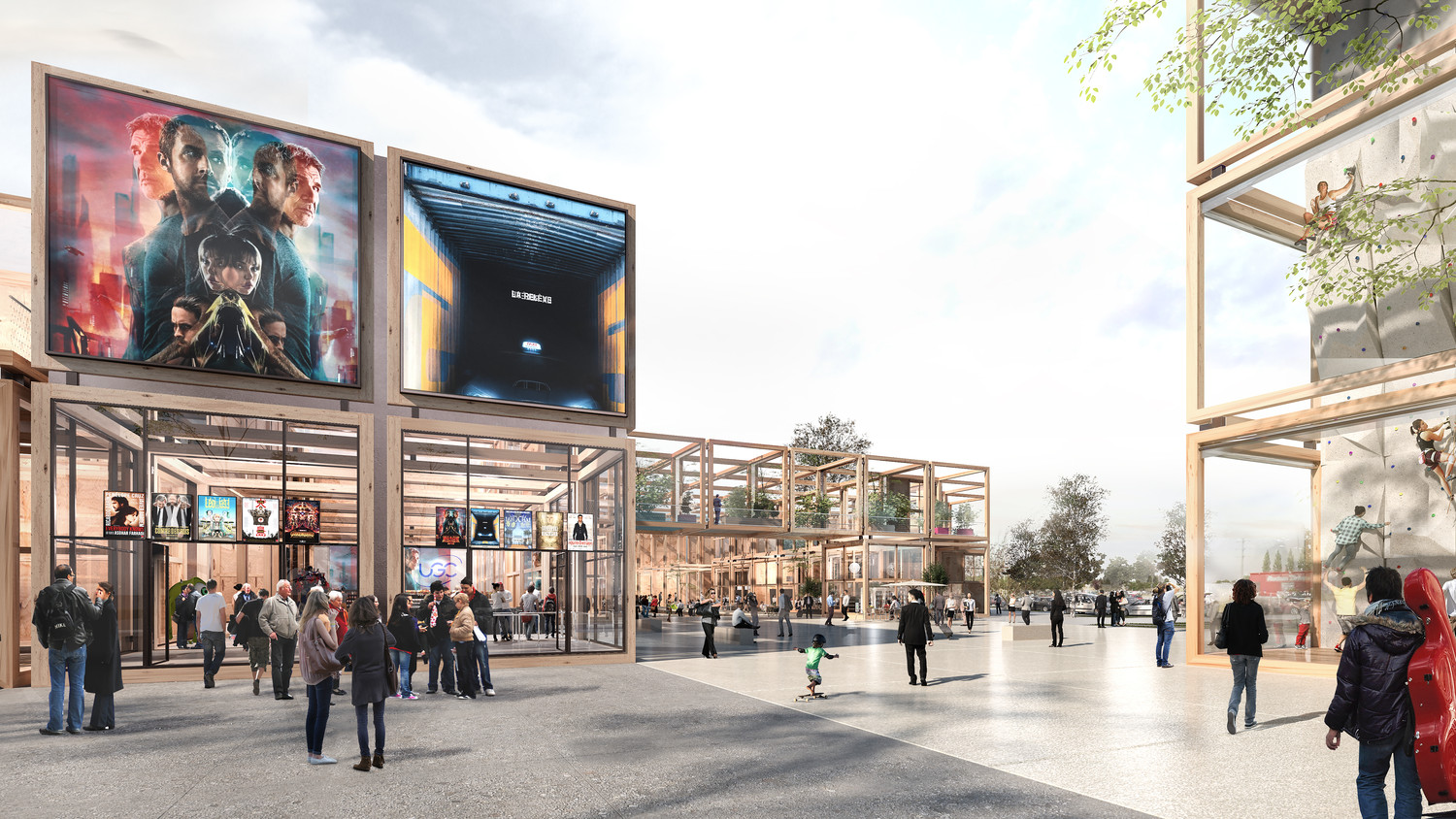
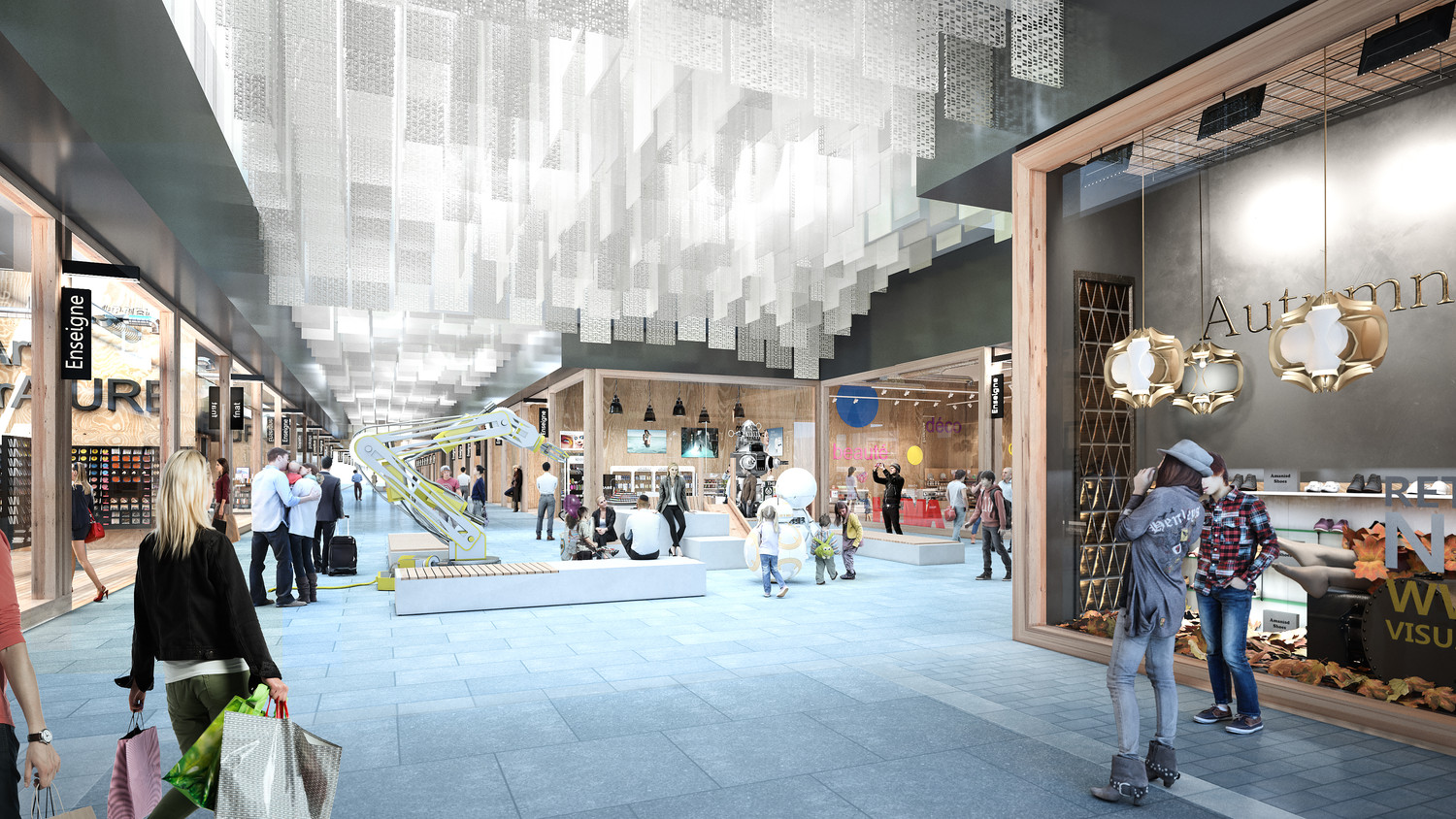
Restructuring-extension of a shopping center, commercial hall, restaurants, leisure, cinema 9 rooms, 120 housing units, urban farm, pop-up stores, outdoor facilities and landscaped car parks.

| Programme | Renovation of the Au-shopping mall and creation of a leisure center in place of the former Leroy Merlin store. |
| Floor area | 5,000 m² shopping mall renovation and 8,000 m² leisure center development. |
| Project owner | Ceetrus |
| Location | Roncq, France |
| Design team | Architect Loci Anima |
| Construction cost (excluding VAT) | Shopping mall renovation: €6.25 million, Leisure center development: €3.8 million. |
| Dates | In progress |
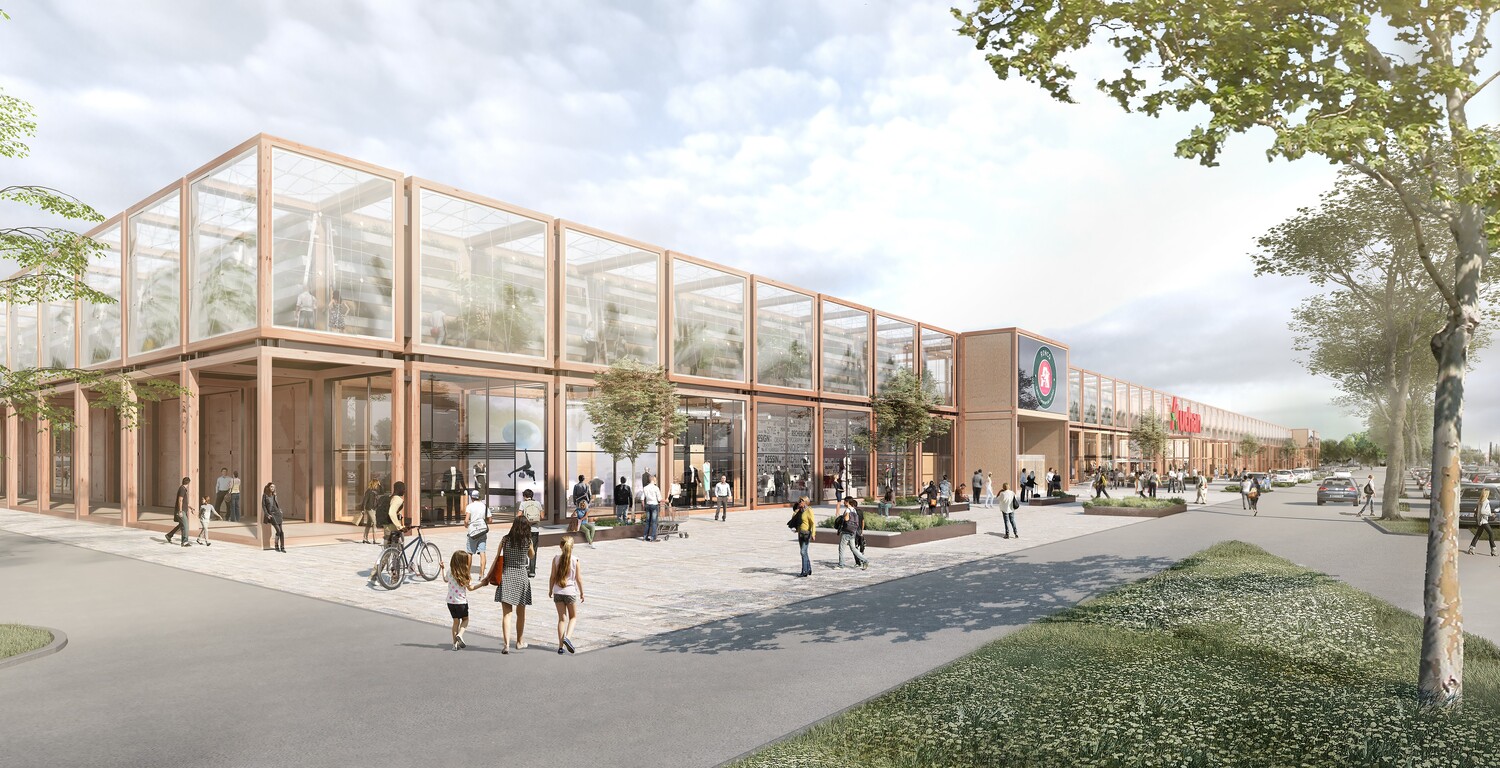
The project for the Auchan Shopping Mall in Roncq, designed by the firm Loci Anima, represents an ambitious transformation of an existing shopping center into a dynamic and sustainable urban hub.
Program and features
Floor area: 5,000 m² for the shopping mall and 8,000 m² for the leisure center
Client: Ceetrus
Location: Roncq, France
Construction cost (excl. tax): €6.25 million for the mall and €3.8 million for the leisure center
Dates: Ongoing
A sustainable and innovative approach
Loci Anima incorporated a reuse strategy for existing materials, notably terracotta shingles, to create a warmer, more human-scale façade. This approach aims to reduce the project’s carbon footprint while valuing local resources.
Project objectives
Shopping mall renovation: To offer a more modern and welcoming space for visitors.
Creation of a leisure hub: Installation of a 9-screen cinema, restaurants, pop-up stores, and an urban farm to diversify the site’s offerings.
Improvement of outdoor spaces: Development of landscaped areas and landscaped parking to enhance the site’s integration into its urban environment.
This project illustrates Loci Anima’s ability to rethink traditional shopping centers as integrated, sustainable living places adapted to contemporary needs.